

Who are the Redemptorists?
The Congregation of the Most Holy Redeemer (Redemptorists) grew out of a perceived need, namely to minister to those most abandoned and the poor. St. Alphonsus Liguori, the founder of the Redemptorists founded the Congregation to be preach this Good News, this plentiful redemption of God to those who had not heard the Gospel.
The motto of the Congregation is "Copiosa Apud Eum Redemptio" (With him is plentiful redemption). Taken from Psalm 130, it emphasizes the generous and abounding love and mercy that God has for humankind. This is highlighted most prominently in the facets of Alphonsian spirituality: Crib, Cross, Sacrament, and Mary.
Today, the Redemptorists are present in over 80 countries throughout the world and continue the great legacy set forth by St. Alphonsus and his early companions. You can read more about his life and our other Redemptorist saints below.
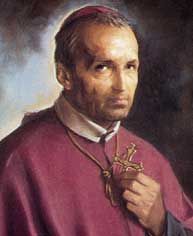
Our Founder: St. Alphonsus Liguori
Feast Day: August 1
Alphonsus Maria de Liguori was born in 1696 near Naples, Italy, the son of a captain in the Royal Navy and a very devoted mother from a noble family in the city. His parents provided him with an exceptional education in philosophy, literature, and the arts. He was 16 when he was awarded doctorates of civil and canon law. When he was 18, like many nobles, he joined the Confraternity of Our Lady of Mercy with whom he cared for the sick at the hospital for “incurables,” washing afflicted bodies, feeding the helpless, changing bedclothes and devoting himself to works of mercy and compassion.
The work of a lawyer, however, could not satisfy his deeper longings. After losing what was the most important court case he had ever taken on, Alphonsus left the legal profession to enter the priesthood, much to the disappointment of his father. He was ordained in 1726. Christ’s claim on the heart of Alphonsus was absolute and irresistible. As a young priest he worked himself to the point of exhaustion. Caring for the poor, wherever his journey took him, was the hallmark of his calling.
In 1732, Alphonsus realized he could no longer be comfortable in his role of popular preacher living apart from the poor. So, leaving his family and his dearest friends, he set out to dedicate himself completely to the service of the poor and most abandoned. He sought others who were called as he was, and adopted a style of ministry to “mission among the people” — and so began the Congregation of the Most Holy Redeemer, commonly known as the Redemptorists.
In addition to his role as founder of the Redemptorists, Alphonsus was made bishop of St. Agatha of the Goths in 1762. He was also a gifted artist, composer and writer, and in his lifetime would write over 110 books, including his Visits to the Most Blessed Sacrament, The Glories of Mary and his massive Moral Theology. St. Alphonsus died in 1787 and was canonized in 1839 and declared a Doctor of the Church in 1871. St. Alphonsus is the patron saint of confessors, moral theologians, lawyers and arthritics.
Our Redemptorist Saints
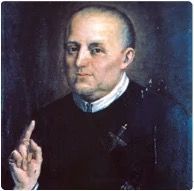
St. Clement Hofbauer
Feast Day: March 15
St. Clement Hofbauer was born in Tasswitz, Moravia (now the Czech Republic) on December 26, 1751. In his early youth, after the death of his father, he worked as an apprentice baker. He was able to follow the call to the priesthood by completing first his secondary schooling and then his catechetical, philosophical, and theological studies in Vienna, Austria. During this time, he made yearly pilgrimages to Rome, where he encountered the Redemptorists.
In 1784, Clement entered the Redemptorists, professed religious vows on March 19, 1785, and was ordained a priest on March 29. As vicar general of the Congregation north of the Alps, Clement founded the first house of the Redemptorists in Warsaw, Poland. Other houses were established in Poland, Germany, Switzerland, and Romania. He lived in Warsaw from 1787 to 1808, and with the collaboration of laypeople of various nationalities, he developed a very fruitful apostolate, promoting good works and strengthening the piety of the faithful.
With the takeover of Poland by Napoleon, the Redemptorists were suppressed and Hofbauer — forced to leave Warsaw — made his way to Vienna. Through the charisms of spiritual direction, preaching, confession, and works of charity, he converted and helped people of every social class.
Clement died at Vienna on March 15, 1820. He was canonized by St. Pius X on May 20, 1909. He is co-patron of both Vienna and Warsaw.
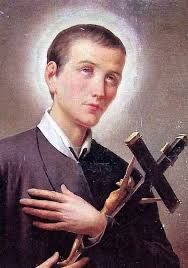
St. Gerard Majella
Feast Day: October 16
St. Gerard Majella was born in Muro Lucano, Italy, on April 6, 1726. When his father died, Gerard, being the only son, had to provide for his family by working as a tailor. At the age of 14 he sought to enter the Capuchin friary but was rejected because of his poor health. After a short time as the domestic servant of the bishop of Lacedonia, he returned to tailoring but earned a minimal income.
In April 1749, after attending a Redemptorist mission in Muro, Gerard succeeded in getting himself accepted by the Congregation. Following a trial period and a year of novitiate in the house at Deliceto, he professed religious vows on July 16, 1752. Gerard was noted for his observance of the Redemptorist rule and collecting money for the material needs of the community.
His presence to people who were weighed down by poverty and illiteracy was a sign of hope to them. Gerard had great empathy and testified to trust in the love and the compassion of God.
During his five years as a brother in the congregation Gerard was remarkable for his apostolic zeal, patience in sickness, love for the poor, deep humility in the face of false accusations, heroic obedience, spirit of penance, and constancy in prayer. He wrote numerous letters of spiritual direction.
The Lord favored him with many spiritual gifts, including prophecy, the ability to read people’s hearts, and the gifts of miracles. He died at Materdomini on October 16, 1755. Gerard was canonized by St. Pius X on December 11, 1904. He is invoked as a patron of mothers, especially in time of pregnancy. Couples hoping to conceive a child also seek St. Gerard’s intercession.
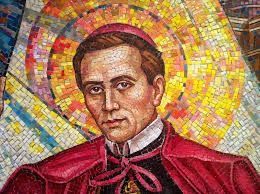
For more information on St. John Neumann, you can visit the National Shrine of St. John Neumann in Philadelphia or visit https://stjohnneumann.org/
St. John Neumann
Feast Day: January 5
John Neumann was born in Prachatice, Bohemia (present day Czech Republic) on March 28, 1811. He studied theology in the seminary of Budweis. Zealous for the missionary life and to lead souls to Christ, he decided to leave his homeland to dedicate himself to the European immigrants in America, who were deprived of spiritual support.
Neumann was ordained a priest by the bishop of New York in 1836 and gave himself to the pastoral care of people in the vast area around Niagara Falls.
Wanting to live in a religious community that corresponded more to his missionary vocation, in 1842 he entered the Redemptorists. A tireless missionary, Neumann busied himself with the German immigrants, in Pittsburgh and Baltimore.
Having filled the role of vice-provincial superior of the Redemptorists from 1846-49, he became the parish priest of St. Alphonsus Church in Baltimore. In 1852, at the age of 41, he was named bishop of Philadelphia.
Neumann had a strong effect on the religious life of the United States by founding Catholic schools and promoting the 40 Hours devotion. He brought many congregations of religious sisters into his diocese, including the School Sisters of Notre Dame, the Sisters of St. Joseph, and the Sisters, Servants of the Immaculate Heart of Mary. In just seven years, he built many churches, as well as several hospitals and orphanages. As a bishop, Neumann was untiring in visiting his vast diocese.
On January 5, 1860, at the age of 48, he died suddenly on a Philadelphia street. Neumann was beatified during the Second Vatican Council in 1963, and was canonized in 1977. In the homily on Neumann’s canonization, Pope Paul VI summarized the activity of the new saint: “He was close to the sick, he loved to be with the poor, he was a friend of sinners, and now he is the glory of all immigrants.”